
¿QUÉ ESTÁS BUSCANDO?

In the design of electric cylinders and various linear actuators, the ball screw is the core transmission component that converts rotary motion into high-precision linear motion. The appropriate selection directly determines the actuator's load-bearing capacity, positioning accuracy, operating speed, and service life.
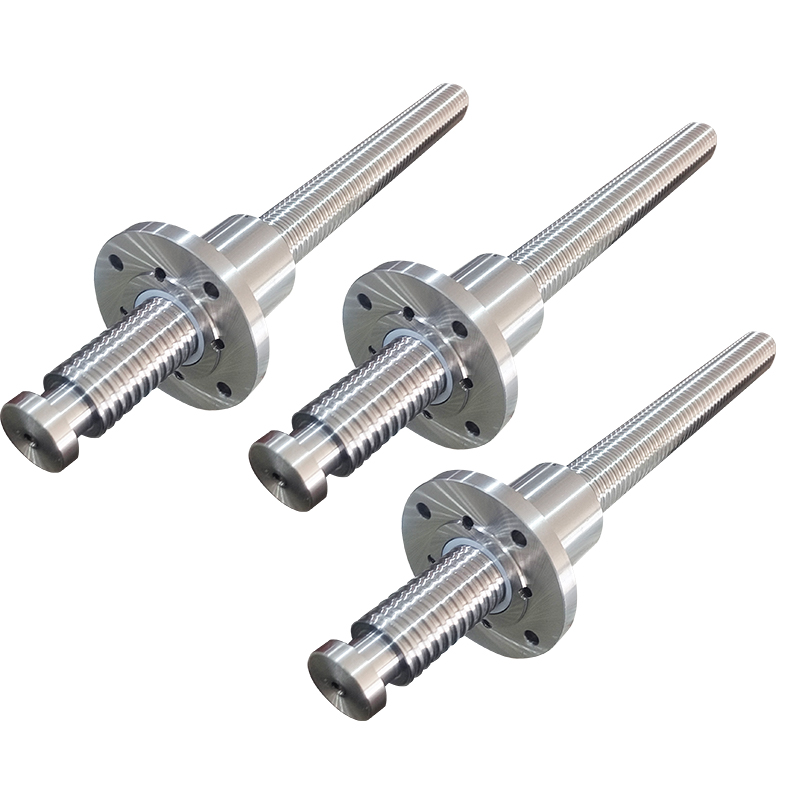
To select the most suitable ball screw for a linear actuator, the following core technical considerations and selection steps can be followed:
I. Core Selection Factors
When selecting a ball screw, the following five dimensions need to be evaluated:
1. Load and Life Calculation
The selection first requires calculating the axial load of the actuator throughout its entire working cycle (including acceleration load, frictional resistance, and cutting/pull forces).
Rated Dynamic Load: Determines the maximum dynamic axial force that the screw can withstand within its rated life.
Rated Static Load: Determines the maximum peak impact force that the ball screw will not undergo permanent deformation under static or extremely low-speed conditions.
Life Calculation: Calculate the rated life of the screw using the axial equivalent load, considering the duty cycle, to ensure that the cumulative operating mileage or operating hours required by the system are met.
2. Lead and Speed Matching
Large lead: Suitable for high-speed, long-stroke applications (such as automated material handling and rapid push-pull actuators), but requires greater drive torque and cannot self-lock.
Small lead: Suitable for high-thrust, high-precision fine-tuning applications, with high motor torque utilization.
3. Critical Speed and Lead Screw Stability
As the stroke length increases or the speed increases, the lead screw is prone to two types of physical failure:
Critical speed (resonance): When the lead screw speed approaches its natural frequency, it will vibrate violently. The critical speed can be significantly improved by increasing the lead screw outer diameter or optimizing the support method (e.g., upgrading from "one end fixed - one end free" to "both ends fixed").
Lead screw stability (buckling failure): When the thrust actuator is subjected to heavy axial loads of push and pull, the lead screw with an excessively large slenderness ratio is prone to bending instability. The critical buckling load needs to be calculated using Euler's formula.
4. Accuracy Grade and Preload
The machining process and preload method should be selected based on the actuator's positioning accuracy requirements:
Accuracy Grade | Representative Process | Applicable Actuator Scenarios
C3 / C5 | Grinding Grade | Semiconductor equipment, high-precision CNC axes, medical precision actuators
C7 / C10 | Rolled Grade | Industrial automation push rods, access control systems, general material handling actuators
Backlash Elimination and Preload: For scenarios requiring frequent forward and reverse rotation with no backlash requirements, double nut preload or overload ball preload (such as P1/P2 preload grades) can be selected to improve rigidity and eliminate backlash.
5. Nut Structure and Installation Space
The actuator housing structure typically limits the nut's dimensions:
Flange Nut: Good installation rigidity, easy bolt installation and fixing, most commonly used at the actuator front end.
Cylindrical Nut: Compact radial dimensions, suitable for space-constrained tubular electric cylinder designs.
Circulation Method: External circulation (embedded conduit, good durability) and internal circulation (smaller outer diameter, high speed and quiet operation).
II. Linear Actuator Screw Selection Process
In practical engineering design, the following standardized process is recommended for step-by-step selection:
1. Confirm System Motion Curve and Mechanism Parameters:
Determine axial force, stroke, and operating speed. Analyze the mechanical structure of the linear actuator (horizontal, vertical, or inclined installation), clarifying the maximum push-pull force, effective stroke, operating speed, acceleration, and expected service life.
2. Initial Selection of Screw Diameter and Lead:
Based on speed and torque matching. Calculate the required lead based on the maximum motor speed and target linear speed. Simultaneously, considering the actuator's internal space and axial thrust, initially select the nominal outer diameter of the screw.
3. Check Mechanical Limits (Resonance and Buckling):
Prevent high-speed vibration or heavy-load bending. Calculate the critical speed and critical buckling load according to the screw support method (fixed-fixed, fixed-supported, fixed-free). Ensure the actual maximum speed and maximum axial force.
4. Calculate Rated Life and Rigidity:
Verify Dynamic Load and Deformation. Calculate the equivalent axial load and equivalent speed of the system throughout the entire motion cycle, and calculate the required rated dynamic load based on the target life. Select a suitable nut model and verify the preload and axial stiffness.
5. Determine Lubrication and Protection Methods:
Improve Environmental Adaptability and Maintenance Cycle. Based on the actuator's working environment (high temperature, cleanroom, dust protection level), select appropriate grease/oil and the sealing components (scraper plates) at the nut end.
III. Summary and Selection Recommendations
When selecting ball screws for linear actuators, do not blindly pursue the highest precision grade and maximum preload—while excessive preload can bring extremely high rigidity, it will significantly increase frictional torque, leading to increased heat generation and reduced transmission efficiency. Under the premise of meeting system thrust, speed, and life, selecting a "just enough" machining process (such as using a high-quality rolled C7 screw with a preloaded nut for automated actuators) is often the best cost-effective choice.
Siga leyendo, manténgase informado, suscríbase y lo invitamos a que nos diga lo que piensa.


 Soporta red IPv6

 SUSCRÍBETE A NUESTRO BOLETÍN